

The Australian consumer marketplace relies heavily on a constant flow of electrical equipment, ranging from everyday household appliances and mobile device chargers to complex industrial tools. While consumer demand for new and innovative electronics continues to rise, regulatory bodies maintain stringent oversight to ensure public safety. Bringing electrical goods into Australia requires a comprehensive understanding of state and federal regulatory frameworks designed to prevent hazardous products from reaching end consumers.
Without robust internal quality control and strict regulatory adherence, a single non-compliant batch of electrical items can result in severe safety risks, forced market withdrawals, and significant financial loss. Australian suppliers and importers carry ultimate legal responsibility for the safety and compliance of every electrical product they distribute. Securing expert product recall support for electrical products ensures that businesses can navigate complex compliance requirements and respond effectively if safety discrepancies ever surface.
Developing strong internal governance mechanisms is the most effective defense against compliance failures. By embedding rigorous compliance checks throughout the supply chain, businesses can identify defects, unsafe components, and documentation gaps early. Understanding electrical product compliance Australia standards is not merely a legal obligation; it is a critical strategy for protecting brand reputation and consumer wellbeing.
Understanding the Regulatory Landscape for Electrical Safety
Electrical safety regulations Australia operate under a dual framework involving both state-based safety regulators and national safety schemes. The Electrical Equipment Safety System (EESS) harmonizes safety rules across participating jurisdictions, establishing clear compliance pathways for suppliers, importers, and manufacturers.
Regulators such as Energy Safe Victoria, NSW Fair Trading, and Queensland Electrical Safety Office actively enforce safety requirements. Products imported into Australia must comply with specific Australian and New Zealand standards (AS/NZS). Failing to meet these standards can lead to immediate sales bans, public warnings, or mandatory safety recalls overseen by regulatory authorities and the Australian Competition and Consumer Commission (ACCC).
The Regulatory Compliance Mark (RCM) and Classification System
To maintain compliance, suppliers must understand the classification of their electrical goods under the EESS framework. Equipment is categorized into three distinct risk levels:
Level 1 Risk Equipment includes low-risk devices that do not fall under higher classification tiers. While these products still must be safe for use, they do not require mandatory third-party certification prior to sale.
Level 2 Risk Equipment encompasses medium-risk products, such as certain types of lighting and household gadgets, which require a valid compliance folder or test report proving adherence to relevant standards.
Level 3 Risk Equipment consists of high-risk items, including power supply units, hairdryers, and flexible cords. These items must undergo rigorous testing by accredited laboratories and receive a formal Certificate of Approval before being registered on the national database.
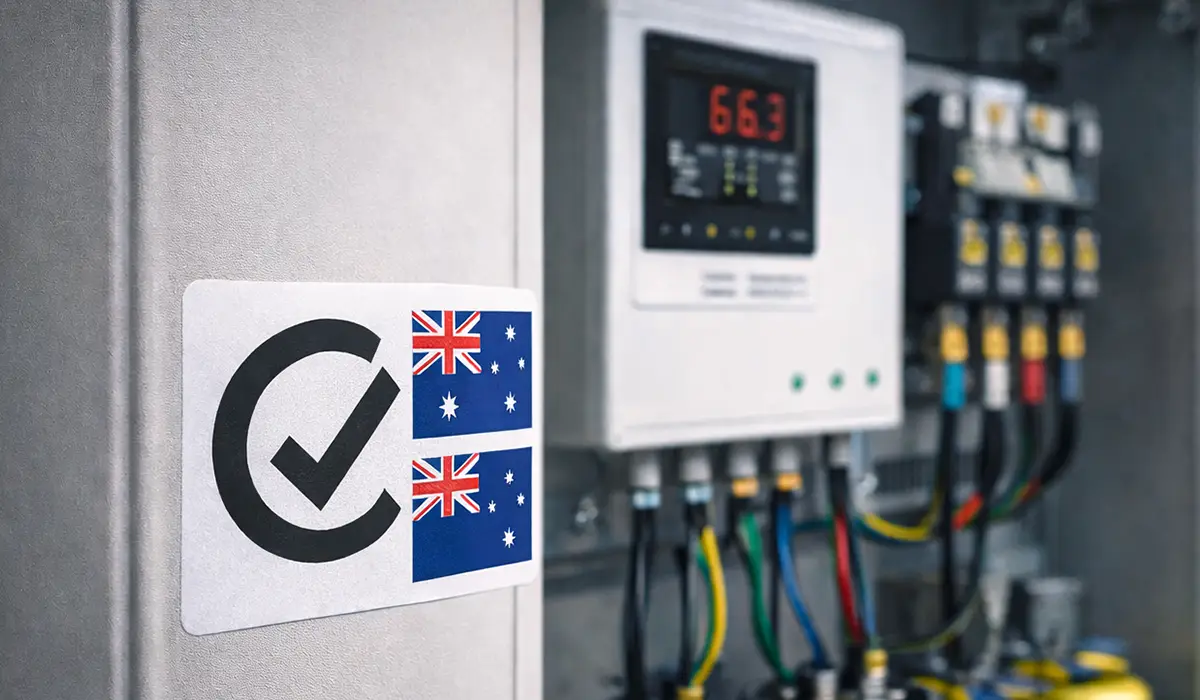
Once compliance is verified, products must display the Regulatory Compliance Mark (RCM). The RCM indicates that the product complies with both electrical safety and electromagnetic compatibility (EMC) requirements. Selling unmarked or uncertified Level 3 products is a major breach of law and a primary cause of emergency product recalls.
Common Compliance Gaps That Trigger Electrical Recalls
Preventing electrical recalls requires identifying potential failure points before products hit the market. Recalls often stem from preventable compliance oversights, including:
1. Unauthorised Component Substitution: Foreign manufacturers sometimes swap internal components, such as capacitors, transformers, or insulation materials, with lower-cost alternatives after initial sample testing. These unapproved changes can lead to overheating, electrical shock, or fire hazards.
2. Inadequate Insulation and Clearance: Electrical items must maintain minimum creepage and clearance distances between live parts and accessible external surfaces. Poor design or assembly can create arc flashes or shock risks.
3. Counterfeit or Invalid Certificates: Importers sometimes rely on test reports or certificates provided by overseas suppliers without verifying their authenticity or ensuring the issuing laboratory holds proper accreditation.
4. Incorrect Plugging and Cord Standards: Power cords and plugs must comply precisely with Australian dimensional and insulation requirements. Pins that do not match local socket specifications create severe fire and shock risks.
Building Strong Corporate Governance to Prevent Recalls
Avoiding costly recalls requires proactive quality assurance rather than reactive damage control. Suppliers and importers should establish clear corporate governance protocols to maintain product integrity.
First, implement strict supplier auditing processes. Never rely solely on documentation provided by third-party overseas vendors without independent verification. Conduct regular pre-shipment inspections and random batch testing through accredited test facilities in Australia.
Second, establish a comprehensive compliance register. Maintain thorough records of all test reports, Certificates of Conformity, RCM registrations, and factory audit results. These records must be readily accessible if regulatory authorities request proof of compliance.
Third, establish continuous post-market monitoring. Track customer feedback, return rates, and repair logs for recurring technical issues. Early detection of a technical fault allows a business to take voluntary corrective action before a minor glitch turns into a widespread safety crisis.
Protecting Your Brand Through Regulatory Diligence
Navigating the complexities of electrical product compliance in Australia demands ongoing vigilance and structured management systems. By prioritizing safety compliance, verifying international test reports, and maintaining strong oversight of offshore manufacturers, businesses can substantially lower their exposure to recall risks. Proactive regulatory compliance safeguards not only consumer safety but also the financial stability and reputation of your business.
